Consultations in Bowen Theory
Consultations in Bowen Theory is a conference series designed to assist professional people in the pursuit of clinical, organizational, or clerical excellence in applying Bowen theory. Using presentations, videotaped interviews, and discussion, these 3-hour online conference days illustrate the interplay of theory and technique for a variety of human issues. The goals of each conference are to illustrate the application of Bowen theory in practice and to enhance understanding of differentiation of self.
A different faculty member is responsible for each conference and selects a topic of professional interest to them. The format of the day includes a presentation on a particular theoretical theme followed by videotape of a session with a consultee that illustrates the topic. After each presentation, there is ample time for questions and discussion. The series, with its changing topics and presenters, provides an opportunity to hear different perspectives on Bowen theory applied to a broad range of problems that can be encountered in clinical, organizational, or clerical consultation settings.
Conference registration will be available in September. Sign up for our newsletter for registration and conference updates..
2026 - 2027 Conference Series
Registration | Schedule | Continuing Education | Who Will Benefit
Registration
Each conference, except for November, lasts from 9:30am to 12:30 Eastern time with a 15 minute break.
Fee: $125 per conference. Register for individual conferences at their links below.
A maximum of 3 CEs are offered for any CE eligible conference. Select at registration with no addition charge.
Students: $35. To receive your discount code, please contact info@thebowencenter.org with school enrollment verification.
Bowen Center Learning Program Participants: Please see your participant page for your discount codes.
A longer program is offered each November, the day before the Fall Symposium. This 6 hour program is hybrid, either in person or online. It typically features two videotaped sessions and more extensive presentations or other programing, such as faculty panel discussions. Ample time for discussion is provided. 5 CEs are available.
Refund policy: With notice prior to the conference, registrants who are unable to attend the conference they’ve paid for may be able to attend another Consultations in Bowen Theory conference in the same calendar year.
QUESTIONS: info@thebowencenter.org
Schedule
NOVEMBER 5, 2026 *Hybrid | Arlington, VA or Online
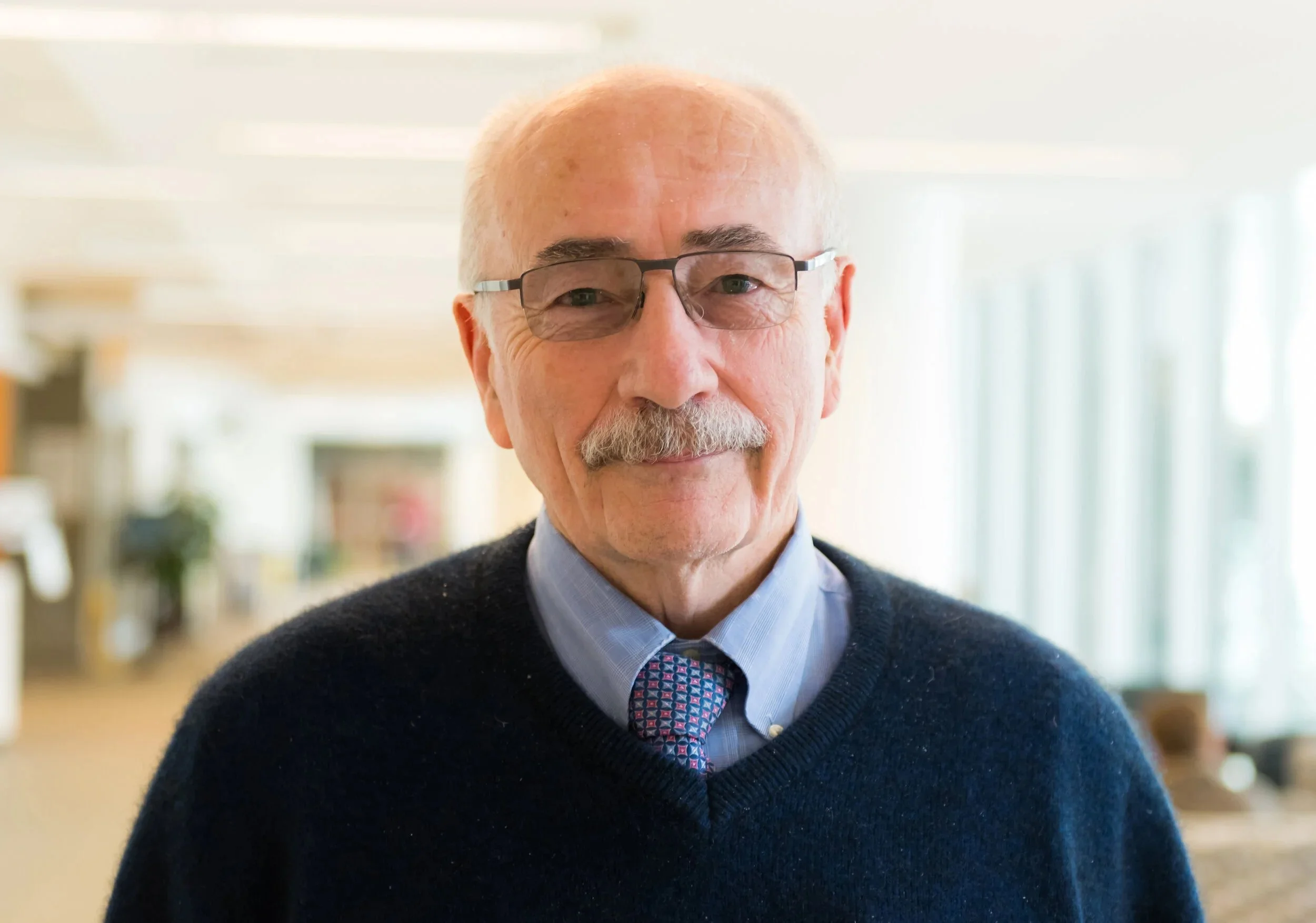
Systems Thinking, Science, and Helping—A Journeyman’s Odyssey
Hybrid Conference: Saint George's Episcopal Church, Arlington, VA or Online
Systems thinking provides no magical answers. but it does provide a different way of conceptualizing human problems. It offers a more realistic evaluation of the difficulty in changing the basic patterns in any human dilemma, and it suggests ways to avoid some of the pitfalls of conventional thinking and to institute progress toward long-term goals. Bowen, 1973
How can you present yourself as a helper to others when you can’t be helpful to those you care most about? (paraphrase of a Bowen remark, April 1974)
Journeyman: an experienced reliable worker, athlete, or performer especially as distinguished from one who is brilliant or colorful (Merriam-Webster)
Many years ago, I set out on a quest. At the time I did not know that was what I was doing. Gradually, the initial goal of the quest became clearer—to learn how to be helpful. Initially, that took the form of helping strangers as a therapist. Like Don Quixote, I wandered through the candy store of therapy techniques—sensitivity training, Gestalt groups, psychodrama, primal therapy and so on. Some of it was great fun, some not so much. Fun, yes, but none seemed to be effective in understanding how to help me to function more competently in the world, let alone assist others.
Then I ran into Murray Bowen and the remark noted above. It came at a two-day conference in Knoxville, Tennessee, where Bowen presented his research to a large audience of academicians and therapists. He focused on how the family functioned—the clinical family to be sure, but beyond that was the therapist’s own family. How was the therapist functioning in his own family? Suddenly the direction of the quest became clearer. I would have to work on my abilities to be present in my own family, to relate competently to the people I cared most about, and to learn more about myself, the family history and how the family has managed the challenges of living across time.
As I worked haltingly on those tasks across the years, the quest expanded. I needed to know more about how the human functions—physiologically, emotionally, psychologically, and behaviorally. The odyssey now took me into the world of theory and science. My path led me to research as a consumer, not an investigator. Could I understand research processes and findings from many fields and translate that information into a growing understanding of the human? Could that information inform the efforts to assist myself, those I care most about, and other co-travelers through life?
Although there have been many missteps and blind allies along the way, I think I’ve learned a few things. During this clinical conference I will try to review what I’ve learned from the Odyssey and where it might go in the future. I will ask consulting families to help me by adding what they learned in consultation and in their own efforts.
5 CEs available
Friday, December 11, 2026
Nuclear Family Emotional Process and Clergy Life
What difference does study of nuclear family emotional process make in the functioning of an individual or organization over time? Does that work impact a faith leader’s work in the faith community? Does this process show up in the same ways in the family and faith community? Does the work on self in one area transfer or translate to the other? This conference will explore these questions in the life of one clergy member. It will look at the nuclear family emotional process and the impact in two groups, family and congregation.
Friday, January 8, 2027

When Symptoms Light up the System: Observing the Family as an Emotional Unit
Kathleen Cotter Cauley, MEd, LMFT
When unexpected challenges emerge in one’s life, family emotional process is always in the background. Whether physical, mental-emotional, or behavioral in nature, the family unit can light up with reactivity.
This conference will address ways to observe the patterns in the family and to manage self accordingly. A clinical video will be shown to illustrate differentiation of self in a family under heightened stress.
3 CEs available
Friday, March 12, 2027
Financial Responsibility and Differentiation of Self: It’s Not Just About Money

“Our adult son is financially dependent on us—what should we do?”
“My spouse is a spendthrift; I can’t keep up with the spending.”
“I grew up with very limited financial resources and promised myself I would never be in that position again.”
Questions and dilemmas about money are common in both clinical practice and family enterprise consulting. While these concerns often appear to be about financial resources, they frequently reflect broader emotional processes within the family system. This session explores the relationship between financial responsibility and differentiation of self. Using Bowen Family Systems Theory as a framework, participants will gain a systems perspective and useful questions for thinking about money, family relationships, responsibility, dependence, autonomy, and individual functioning.
3 CEs available
Friday, April 16, 2027
The Oldest Child’s Burden: Triangles, Cutoff, and the Journey Toward Differentiation of Self.

This clinical conference explores how Bowen theory illuminates the experience of sibling position, particularly the invisible weight carried by the oldest child in a family. Drawing on a case followed from late adolescence into adulthood, the presentation traces the shifting shape of a primary triangle, the gradual opening of a longstanding cutoff, and a client's growing capacity to see — and eventually anticipate — the emotional patterns at work in her family. The case also offers a rare opportunity to consider three coming-out processes within a single-family system — father, daughter, and son — and what they reveal about anxiety, identity, and change across generations. Participants will leave with a clearer sense of how differentiation of self unfolds not as a single insight, but as an ongoing, lived process.
3 CEs available
Friday, May 7, 2027
Coming into the Real Family System: Making Sense of Your Diverse System

Staying connected with one’s family system and problem solving is a universal human problem. Bowen theory holds that staying connected to one’s roots is key to growth in a family system. This effort is time-consuming and over a long-term that requires a testing, observing and readjusting one’s participation in the family and thinking about self.
People look for the quickest and easiest ways of dealing with problems in the family. This does not work in complicated systems. Getting to a point of realistically seeing the diversity in the system allows one to have an appreciation of all family functions. Observing the complexity of the family system drawing out the complexity affords the individual a journey that is more
3 CEs available
Continuing Education
Each one-day online Clinical Conference provides a maximum of 3 credit hours of Category I continuing education for counseling or social work. The November 2026 Hybrid conference offers a maximum of 5 credit hours of Category I continuing education for counseling and social work. Register for CEs when registering for your conference. We are unable to offer them after the event. Due to clinical confidentiality, recordings for the Clinical Conferences are not available for later viewing.
REQUIREMENTS FOR CE ELIGIBILITY:
Be sure to select CEs when registering for the conference. CEs are not sold the day of the conference.
Attend each live streamed or in-person class in its entirety. The CE coordinator will note your attendance. We do not offer partial credits for partial attendance.
If livestreamed, enable video and show your name on screen so that you are visible throughout the entirety of the conference, except during designated breaks or lunch.
Submit a completed evaluation no more than 60 days after the event. Shortly after the submission of your completed evaluation, you will be emailed a certificate.
POLICIES:
The Bowen Center does not offer refunds for CEs.
We are unable to offer CE credit for viewing any recordings.
We do not offer partial CE credit for partial event attendance.
It is the sole responsibility of the participant to verify their state’s professional licensure criteria for CE qualifications.
LEARNING OBJECTIVES
Demonstrate an understanding of the core concepts in Bowen theory.
Demonstrate a knowledge of the application of the concepts in clinical practice.
Demonstrate an understanding of Bowen family systems theory and the individually oriented theories used in clinical practice.
Demonstrate a knowledge of the similarities and differences in the application of conventional theories and Bowen theory in clinical practice.
Demonstrate the use of strategies employed in Bowen theory.
Demonstrate the capacity to maintain a family focus in all phases of the treatment process.
Demonstrate an understanding of the importance of one’s own self-awareness in being an effective therapist.
Demonstrate an understanding of the role of the coach/therapist in the clinical process.
Demonstrate the ability to address a wide range of social, emotional and physical problems when using Bowen theory.
Demonstrate the capacity to intervene appropriately enable the clients to address their issues and concerns.
Demonstrate the ability to employ Bowen theory in all phases of the treatment process including assessment, diagnosis and treatment.
Demonstrate a solid grounding in the values and theory required for competency in clinical practice.
The Bowen Center for the Study of the Family/Georgetown Family Center is authorized by the Maryland Board of Social Work Examiners to provide continuing education credit. This program is a Category I offering.
The Bowen Center for the Study of the Family/Georgetown Family Center has been approved by the National Board for Certified Counselors (NBCC) as an Approved Continuing Education Provider, ACEP No. 6225. Programs that do not qualify for NBCC credit are clearly identified. The Bowen Center for the Study of the Family/Georgetown Family Center is solely responsible for all aspects of the programs.
If you have any questions about Continuing Education, please email ContinuingEducation@thebowencenter.org
ACEP No. 6225

Who Will Benefit
Consultations in Bowen Theory is designed for mental health professionals and other professionals with postgraduate training. This includes but is not limited to: psychiatrists, social workers, nurses, psychologists, counselors, clergy, and other mental health clinicians. Graduate students are especially welcome.